As previously noted, we are moving through the Heart of Dakota study: Creation to Christ. We're currently up to our laurel leaves in ancient Greece. Here are some notes and projects on what we have done these past few weeks. I put the name of the study in ( ) for those who are new to the abbreviations.
Reading:
images from Amazon.com
With HOD (Heart of Dakota) we have been able to substitute a few of the suggested books under the historical reading area. I came across the Magic Tree House books (again-I sorta forgot about them but my older kids liked them way back when) and found they have one devoted to the Olympics/ancient Greece. I reserved it through our local library and also found they created an additional book to go along with it to give more info on Ancient Greece! Score. So These two books served as our mystery book selection. If you decide to use these two just look for them via your library or maybe you already have them on your shelves. It was not a difficult read or challenging to say the least, but the additional info book served to rehash what he was learning throughout the study itself. [They are: Magic Tree House #16: Hour of the Olympics by Mary Pope Osborne and Magic Tree House Fact Tracker #10: Ancient Greece and the Olympics]
Art/Projects:
Sorry it is blurry. I found this idea via a MOH (Mystery of History post...sorry not sure where it is tho...). Basically the student colors with yellow crayon a wide area all over the paper. Then colors over it with black. This is the tricky part-if your paper is not higher grade, when you etch, it will rip or not work right. So anyway-yellow then black over. Press very hard to get a nice thick coat of black. Then etch out a vase shape, and then design. We tried many things and found-get this...the Pampered Chef scraper tool to work the best. I know-go figure. If you don't have one, try a sculpting tool used for clay projects or Play-Doh (seriously, check your kids stash) or an edge of something sharp but not dangerous. They will get that black shavings everywhere so I had the boy do it over a spread out sheet or two of newspaper. Messy.
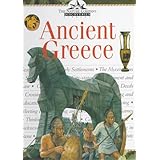
He decided on an octopus and waves for his. We had a book open with various pics showing different art/vases found from that era. The people [very popular theme] would have been too complicated so the four legged [must have been in an accident or something and lost a few limbs] octopus made the cut (or in this case 'etch'). Be careful about what books you use. I keep thinking of the movie The Birdcage. I silently chucked when thinking back on that moment in the movie when the dude's dad and his mate had the table set with their dishes that were Greek inspired (cough...dudes playing 'leapfrog' not). Yah. Go thru the material first unless you want to explain how the Greeks were very, very free with some things. I found these books to be safe enough [some may want to cover a few images if they seem a bit too racy]...and again-got them via the library:
The Nature Company Discoveries Library: Ancient Greece
(this is a Time Life book and shows no official author)
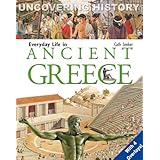
Uncovering History: Everyday Life in Ancient Greece
by Cath Senker
(images from Amazon.com)
Science:
We did an experiment found in the Science Projects Ideas in the House by Robert Gardener. This is noted as a part of the BFB HOS (Beautiful Feet Books History of Science) program that I am piggy backing with HOD. I didn't think it would work but it did.
Games:
I spotted this beauty on
Ellen McHenry's site some time ago, then had to wait til we were into the Greece study. Just look under the free downloads icon, then Geography/Maps. You can find some ancient China, Rome and Japan stuff there too. This does take a lot to print so be sure your ink and paper levels are good to go. This is fun once you get the hang of it. Dad, the boy and I managed our way thru it by mostly guessing, but learned along the way. And he was getting (well us too) some geography lessons in there too. Score again.
And there you go. Some more ideas on studying Ancient Greece.